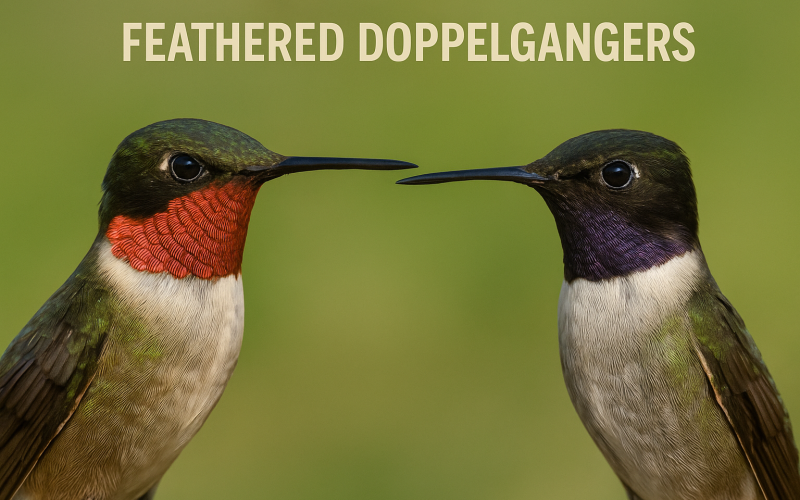
Bird IDs

What Are Feathered Doppelgangers?

What Are Feathered Doppelgangers?

Introducing Feathered Doppelgängers! Is that a Downy Woodpecker? Or a Hairy Woodpecker?Did you just spot a Ruby-throated Hummingbird, or was that a Black-chinned? Birding is fun… until it gets confusing. That’s why we’re excited to launch Feathered Doppelgängers — a new series on texasbirders.com/ that helps you untangle the mysteries of look-alike birds. Each post features:✔️ Side-by-side comparisons✔️ Photo-quality and illustrated graphics Whether you're a new birder squinting at sparrows or a seasoned pro, this series is for you. Have a pair of birds that always mess with your mind? Drop it in the comments — we might feature your…
Read More
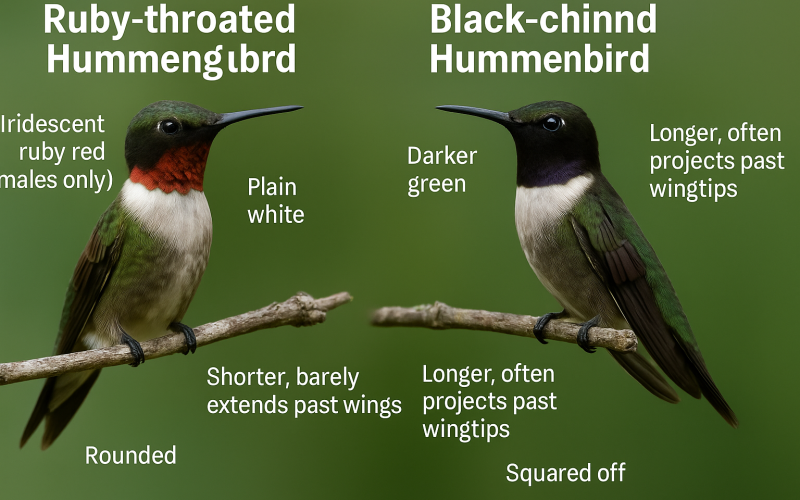
Ruby-throated Hummingbird Vs. Black-chinned Hummingbird IDs

Ruby-throated Hummingbird Vs. Black-chinned Hummingbird IDs

Ruby-throated vs. Black-chinned Hummingbird: Glitter Wars Field MarkRuby-throated HummingbirdBlack-chinned HummingbirdGorget (Throat Patch)Iridescent ruby red (males only), looks black in poor lightIridescent purple strip under black chin (males only)Throat (females)Plain white with faint streakingAlso white, but often with more fine gray streaksCrown ColorBright green crown and backDarker green crown, sometimes looks duskyTail (in flight)Tail is shorter, barely extends past wingsLonger tail, often projects past wingtipsTail Shape (perched)Tail ends are roundedTail looks more squared offCallSharp, quick “tik” or “chewt”Softer, more musical “tchew”Range (especially Texas)Migrates through all of Texas, common east of I-35Very common in Central & West Texas, rarer in East TXBehaviorFeisty,…
Read More
Downey vs. Hairy Woodpeckers IDs

Downey vs. Hairy Woodpeckers IDs

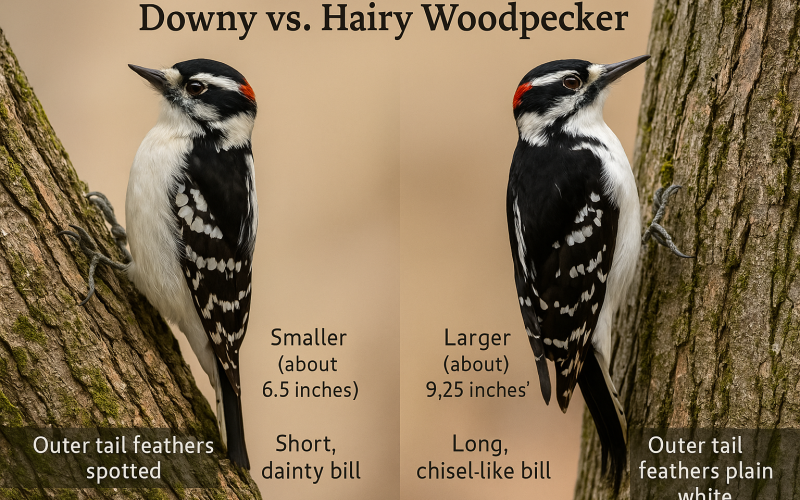
Downy vs. Hairy Woodpecker: A Tale of Two Beaks Field MarkDowny WoodpeckerHairy WoodpeckerSizeSmaller (about 6.5 inches)Larger (about 9.25 inches)BillShort, dainty bill (about ⅓ the length of the head)Long, chisel-like bill (nearly same length as head)Outer Tail FeathersUsually spotted with blackPlain white, no spotsHead MarkingsNearly identical to Hairy’s — includes red patch on malesNearly identical to Downy's — males also have red patchVoiceSofter, whiny “pik” and descending whinnySharper “peek!” and a faster, more aggressive rattleBehaviorOften found on thinner twigs, more acrobaticFavors trunks and larger branches, moves with purposeLocation PreferenceWidespread in residential areas and small treesPrefers larger woodlands and mature forestsAttitude (Unofficial)Curious…
Read More
Double-crested vs. Neotropic Cormorants IDs

Double-crested vs. Neotropic Cormorants IDs

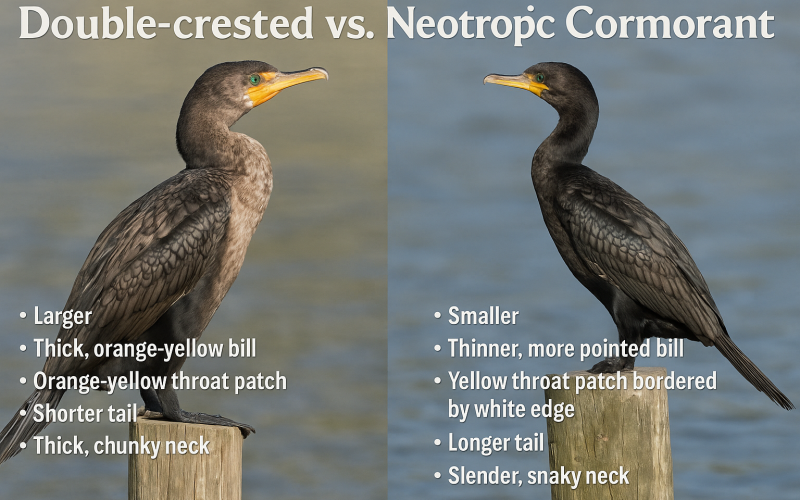
Double-crested vs. Neotropic Cormorant: The Battle of the Blackwater Birds Field MarkDouble-crested CormorantNeotropic CormorantSizeLarger (about 33 inches long)Smaller (about 25 inches long)BillThick, blunt, orange-yellow base; hooked tipThinner, more pointed bill; yellowish base with narrow borderThroat PatchOrange-yellow, smooth and roundedYellow throat patch at sharp angle often bordered by a distinct white edgeTailShorter tailLonger tail, often appears “stubby-bodied, long-tailed”NeckThick and chunkySlender, snaky neckHabitat PreferenceLakes, rivers, reservoirs – comfortable anywhere, even ugly docksPrefers quieter marshes and backwaters, but overlapsFacial FeathersDuring breeding, has short “double crests” on headLacks double crestsVoice (If you’re lucky)Deep, guttural croaks (like a grumpy drainpipe)Quieter and less vocal overallPostureUpright, slightly…
Read More
Cooper’s Hawk vs. Sharp-shinned Hawk IDs

Cooper’s Hawk vs. Sharp-shinned Hawk IDs

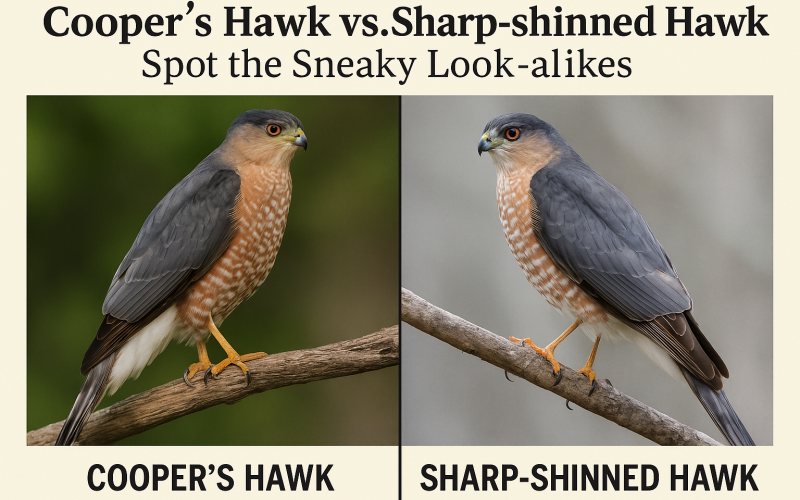
Feathered doppelgängers. Cooper’s Hawk vs. Sharp-shinned Hawk: Spot the Sneaky Look-alikes Field MarkCooper’s HawkSharp-shinned HawkSizeBigger (crow-sized), 14–20 inSmaller (jay-sized), 9–13 inHeadLarge, blocky head sticks out past wings in flightSmall, round head barely peeks past wingsTail ShapeRounded tip with longer outer feathers (like a spoon)Squared or notched tip, all tail feathers about same lengthTail LengthLong tail (often appears too long for the body)Shorter tail in proportion to bodyNeckSlight neck visible – gives a “shouldered” lookNo visible neck – head appears to sit directly on shouldersFlight StyleSteady wingbeats + long glidesQuick, snappy wingbeats + shorter glidesLegsThicker, more robust legsPencil-thin legs Eye PositionEyes…
Read More